Welcome to the Anatomy of an iPhone Map
Welcome to the Anatomy of an iPhone Map
Join us on an interesting journey across the globe, explored during a 10-day studio class, tracing the iPhone’s path from raw materials to retail shelves.
The map is a collective effort put forth by our class to raise awareness on the life of an iPhone.
The map opens with an introduction to iPhones, followed by research exploring all Pre-life processes of the device, from mining and manufacturing to retail. It then moves into Post-life systems, highlighting recycling, e-waste management, and even value capture.
Along the way, we bring forward the Ethical dilemmas uncovered in our research touching on planned obsolescence,lawsuits against Apple, and ongoing debates like the Right to Repair.
We are looking at the systems around us from the lens of “Macro to Micro”, where we uncover the invisible systems behind everyday objects. Systems macro to micro helps us look at and analyse the environments we live in by using various lenses like economy, culture, sustainability, society, technology and policy. This unit enabled us to discover patterns within Apple Inc. and gives us an overview of possible causes and effects associated with the life of an iPhone.
This project is brought to you by the curious minds of second-year students at Srishti Manipal Institute of Art, Design and Technology, studying “Business Services and Systems Design”
Join us on an interesting journey across the globe, explored during a 10-day studio class, tracing the iPhone’s path from raw materials to retail shelves.
The map is a collective effort put forth by our class to raise awareness on the life of an iPhone.
The map opens with an introduction to iPhones, followed by research exploring all Pre-life processes of the device, from mining and manufacturing to retail. It then moves into Post-life systems, highlighting recycling, e-waste management, and even value capture.
Along the way, we bring forward the Ethical dilemmas uncovered in our research touching on planned obsolescence,lawsuits against Apple, and ongoing debates like the Right to Repair.
We are looking at the systems around us from the lens of “Macro to Micro”, where we uncover the invisible systems behind everyday objects. Systems macro to micro helps us look at and analyse the environments we live in by using various lenses like economy, culture, sustainability, society, technology and policy. This unit enabled us to discover patterns within Apple Inc. and gives us an overview of possible causes and effects associated with the life of an iPhone.
This project is brought to you by the curious minds of second-year students at Srishti Manipal Institute of Art, Design and Technology, studying “Business Services and Systems Design”
Hang Tight While we work on the rest of the site !!
Global Supply network of iPhone production
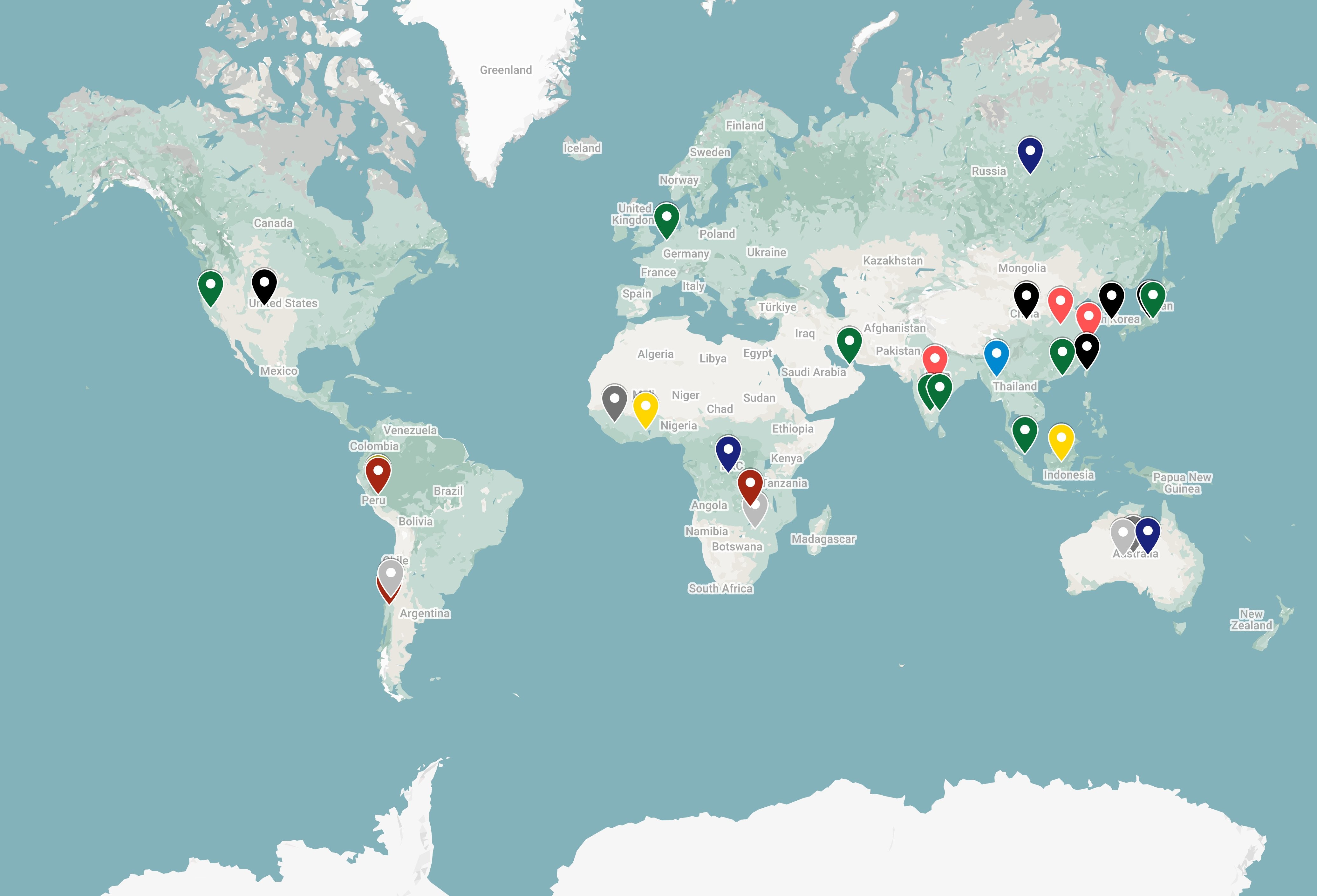
Hover over to magnify
Aluminum mines:
Peru, Ghana & Indonesia
Assembly:
Zhengzhou, Shanghai & India
Rare earth mineral mines:
China, & Myanmar (Burma)
Cobalt Mines:
Russia, DRC & Australia
Distribution:
Elk Grove, Breda, Dubai, Singapore, Hong Kong, Japan, Bengaluru & Chennai
Components:
Japan, United States, China, Taiwan & South Korea
Gold mines:
Russia, DRC & Australia
Lithium mines:
Australia, Chile & Zimbabwe
Copper mines:
Chile, Peru & Zambia
01
Features built fame
The Pre-Life Story: Innovation, Influence, and Inequality
Every iPhone has a story that begins long before it lights up in your hand. Its “prelife” stretches across continents from China’s factories and India’s assembly lines to cobalt mines in the Democratic Republic of Congo.
Apple’s dominance is rooted not just in design and technology but in monopsony power: securing exclusive deals with suppliers, investing billions in supply chains, and shaping entire markets. Yet, this comes with human and environmental costs - overworked laborers, factory suicides, child miners, and strategic material shifts disguised as sustainability
At the same time, Apple’s marketing brilliance, evolving from “features built fame” to lifestyle branding, ensures consumers see not the struggles but the dream. The prelife of iPhones is a story of innovation and influence, shadowed by exploitation and control.Apple’s marketing strategy has transformed over time. In its early years, Apple relied heavily on showcasing functional benefits and technical specifications—highlighting innovation, product comparisons, and superior features to gain consumer trust and build fame.
However, as the brand matured and gained global recognition, its focus shifted toward creating emotional connections and lifestyle integration. Instead of selling just a phone or device, Apple began selling an experience, an ecosystem, and a sense of belonging.
This evolution redefined its identity from a technology company to a cultural symbol, where brand loyalty thrives on emotions as much as features.
Before achieving global prominence, Apple’s marketing strategy revolved around showcasing functionality, technical innovation, and product features to gain attention in a competitive market. Traditional advertising methods, direct comparisons, and an emphasis on superior design helped the company establish credibility and build its early reputation. However, once it secured global dominance, Apple’s approach underwent a profound transformation. Marketing shifted from technical persuasion to cultivating aspiration, identity, and lifestyle value. The brand positioned itself not just as a technology provider but as a cultural icon associated with creativity, sophistication, and exclusivity. Emotional storytelling, premium pricing, and digital-first campaigns amplified this identity. By highlighting seamless integration across its ecosystem, Apple fostered deep loyalty, ensuring customers remain within its orbit not purely for functionality, but for the holistic experience it represents.
According to an article published by MarcomCentral about Apple’s Marketing, June 27, 2024-
Some of Apple’s most noticeable campaigns were:
1. 1984, Apple’s most iconic ad and one of the most acclaimed commercials ever created and was also the first to air during a major television event.
It ran during Super Bowl XVIII in 1984 and was created to announce the Macintosh Computer, which signaled the beginning of the personal computer era, led by Apple.
2. The Pencil Test (1988)- this ad demonstrated how users can make animations with the software on Apple Macintosh II computers. Computer animation was not as widespread at this point, and the Pencil Test helped showcase that it was possible, especially with an Apple computer.
3. Mac vs Ordinary PC (1993)- It showcases the Macintosh as easy to use with advanced features, all costing less than a PC
4. Think Different/Here’s to the Crazy Ones (1997)- Featuring black-and-white footage of cultural icons and Richard Dreyfuss narrating a powerful poem, it celebrated rebels and visionaries.
Apple products were often thought of as those for creative applications, not business and tech, and it chose to embrace this image and make an ad that shows how creative people are the ones who make change in the world, rather than those who stick to the status quo.
It pushed customers to “think differently” about both Apple’s products and the world. It also helped cement the idea for Apple’s slogan, “Think Different.”
These campaigns prove that Apple once championed innovation and change. Today, however, its focus leans less on groundbreaking functionality and more on leveraging its brand power—driven by sleek marketing, premium pricing, and precise targeting rather than constant reinvention.
Heyanshe
02
The Human Cost behind the Screen
The origins of Apple's supply chain begin in the extraction of essential minerals like cobalt and tin. This part of the process is often not visible to consumers. It starts in countries such as the democratic republic of the Congo (DRC) and Indonesia. Places where the social and economic conditions are difficult and unstable.
In these regions, mineral extraction is not automated and done by machines but by the labour of people, including children who are working under extremely harsh and unsafe conditions. Miners in DRC, for example, usually dig for cobalt using a little more than hand tools in tunnels that are deep and narrow. The danger is prevalent all the time; the tunnels could collapse, accidents could happen, and the health risks that come with it are severe due to exposure to toxic dust and metals.
Whole families take part in informal mining just to make ends meet. Women and men work side by side, but women may do the most physically challenging role and the least secure one.
In Indonesia, mining happens both on land and off the coast. There is a lot of environmental damage that comes along with this.
Rivers and forests are destroyed, local fish populations collapse, and pollution affects both people and wildlife. Labourers live in such poor conditions without even their basic needs being met.
Mining in countries like Indonesia and Congo is highly exploitative, with little to no regulation and often illegal. In contrast, the mining in use is more closely regulated to safeguard human rights, health and the environment.
Local middlemen advance loans for basic needs like tools or food, then trap miners in perpetual debt through unimaginable interest rates, forcing them to keep working in the mines.
In summary, the complex pattern of exploitation in Apple's mining and refinery supply chain from hazardous labour and environmental damage to health risks in refiners and the effects on local communities.
Aashna
03
Why Are Wages Low and Working Conditions Poor in Apple’s Global Supply Chain?
The iPhone is one of the most popular gadgets worldwide, but behind its sleek design and features lies a complex global system. One important part of this system is the labor used to assemble these devices, especially in factories run by companies like Foxconn in countries such as China and India. This article focuses on the serious issue of labor exploitation in Apple’s supply chain, where workers face low wages, long overtime, and unsafe living and working conditions.
Apple’s iPhones are mostly assembled in factories in China and increasingly in India. For example, Foxconn’s big plant in Tamil Nadu, India, produces about 20 million iPhones a year. Workers there earn roughly ₹82 to ₹101 per hour, which is less than $1.22. This is barely above local minimum wages and far below a living wage that could support a family. In China, factory workers earn around $200 per month as a base wage but rely heavily on overtime to earn enough to live.
Speaking of overtime, workers often do 100 to 180 hours a month, far surpassing legal limits of 36 hours. This means they are working long, exhausting days without proper rest. Dormitories provided by factories are often overcrowded and unsanitary. In 2021, 159 workers in India were hospitalized due to food poisoning caused by unsafe hostel food conditions.
Apple itself makes about 35 cents profit for every dollar of sales, a high margin, while suppliers work under much tighter budgets. This pressure leads them to cut costs by paying workers minimal wages and demanding excessive overtime.
Several patterns come up when looking at this data. First, Apple’s huge buyer power allows it to push suppliers to lower costs aggressively, which translates into poor wages and conditions for workers. The widespread use of contract or temporary labor also increases worker vulnerability, as these workers get fewer benefits and less job security. A surprising insight is how much workers rely on overtime to survive, turning the issue from “low wages” to “low base wages that force extreme working hours.” Another notable contradiction is Apple’s public commitment to labor rights versus on-the-ground realities reported by workers and NGOs.
Even with all these findings, many questions remain. How effective are Apple’s audits and supplier codes in really preventing abuse? Are there long-term improvements, or do factories only fix problems when media attention forces them? How can the rights of contract workers, who form the majority of the workforce, be better protected?
Another curiosity is the role of consumers. Do buyers of iPhones fully understand the working conditions behind the product? If people demand cheaper devices, does this indirectly pressure Apple and suppliers to keep wages low?
The labor behind iPhones is a complicated issue shaped by global economics, supply chains, and power imbalances. While Apple has made some progress, workers still face exploitation. Raising awareness, improving transparency, and pushing for stronger protections, especially for contract workers, might help create a supply chain where the rights and dignity of all workers are respected.
According to data published by, TIME Magazine Investigation on Foxconn India Factory,2023.
-China Labor Watch Report, 2024
Sumedha
04
The Foxconn Suicides
In 2010, Foxconn, Apple’s major supplier in China, faced international scrutiny after a series of at least 14 worker suicides at its Shenzhen plant. The tragedy exposed the harsh realities of global electronics supply chains, where low costs and fast delivery often come at the cost of worker welfare.
The crisis involved several actors. Apple demanded cheap, rapidly produced devices. Foxconn management enforced strict production quotas and supervision. Workers, mostly young migrants from rural areas, endured these conditions while living in cramped factory dormitories. Meanwhile, the Chinese government, eager to retain foreign investment, failed to enforce labor protections. Consumers worldwide indirectly fueled the system by demanding affordable electronics.
Multiple factors combined to create unbearable stress. Supply chain pressure led to excessive working hours, often 12–14 per day, beyond China’s legal limit. Low base wages forced workers to depend on overtime just to cover basic living costs and dormitory life meant little privacy or recreation.
Together, these conditions created severe psychological stress, made worse by weak rules and oversight.
The immediate effect was a increase in number of worker suicides, which shocked the world and sparked global backlash against both Apple and Foxconn. International media coverage and labour rights groups highlighted the human cost of cheap electronics, resulting in serious reputation damage for both companies.
In response, Foxconn introduced anti-suicide nets, counseling hotlines, and promised wage increases. Apple increased supplier audits, published responsibility reports, and joined the Fair Labor Association to investigate factory conditions. However, critics argue these measures were largely reactive, addressing symptoms rather than systemic problems. The Foxconn suicides illustrate how global supply chains can push vulnerable workers to crisis. While reforms followed, fundamental issues of long hours, low pay, and weak regulation remain. The tragedy highlights the urgent need for deeper structural change in labor standards, corporate accountability, and consumer awareness in the global electronics industry.
Krithika
05
Child Labour in the Cobalt Mines of the DRC
Cobalt is one of the most important raw materials used in the production of Iphones Cobalt is used in making lithium ion batteries which powers the iphone and about 70% of the world’s cobalt comes from DRC, despite all this wealth, DRC is one of the poorest countries in the world and child labour is a widespread issue in the mines of DRC, this is a result of poverty, weak governance, and global demand for minerals.
Poverty, being the main problem in the DRC, leads to child labour. Children are often put to work to generate a source of income. Additionally, there are no alternative employment opportunities, so mining becomes the primary means of earning a living.
People are not educated, which hinders critical thinking in children and also parents can't afford school fees, which again leads to child labour.
There are certain social norms where people believe working from a young age makes a good impression on the family, another major reason would be the lack of transparency within the system even though child labor is taking place in DRC, refiners or component manufacturers who buy cobalt from DRC would have no idea about this because local traders under report the number of miners working in the mines or there are a lot of artisanal mining taking place and only half of the mines in DRC have security and the rest of it are unofficial mines where child labor takes place.
The globally dispersed cobalt network makes it extremely hard to pinpoint who's responsible for all this. Artisanal mining sites lack safety measures, and children are exposed to toxic materials such as cobalt dust and heavy metals that can cause respiratory illnesses. Many suffer from spinal deformities caused by carrying heavy loads. Prolonged exposure to toxic substances can also lead to developmental issues such as difficulty walking or concentrating. Beyond physical harm, working under such conditions affects mental well-being. Many children experience anxiety, trauma, and emotional distress due to the harsh realities of mining work
There were laws to protect children from exploitation in the workplace; however, neither the Ministry of Labour, responsible for enforcement, nor labour unions effectively enforced child labour laws. In the past, in several mining regions (including Katanga, Western and Eastern Kasai, and North and South Kivu), children performed dangerous, often underground, mine work. according to the Solidarity Center.
In 2020, the Ministry of Mines announced plans to inspect child labour in artisanal mines, but this was delayed due to COVID-19.
In conclusion, the DRC has seen a range of measures aimed at reducing child labour in cobalt mining, from national laws and corporate audits to NGO programs. These interventions have had partial successes but remain insufficient. The persistence of poverty, corruption, and the high demand for cobalt continue to fuel child labour. Eliminating this practice requires stricter supply chain accountability from corporations and also long-term investments in education, livelihood alternatives, and stronger governance within the DRC. Without systemic change, child labour in cobalt mining will remain a pressing humanitarian and ethical issue.
Parth
06
Resources, Policies and Criteria: Apple and the Government
Apple rarely extracts raw materials itself; instead, it buys from a web of refiners and component makers who operate under the laws of the countries where minerals are dug up and processed. That means “how much” Apple can take from any country is ultimately capped by government-issued production licenses and export permissions granted to its suppliers. These limits are expressed through mine-specific production ceilings, concession sizes and durations, and export quotas. In practice, the volume flowing into Apple’s supply chain rises or falls with the host nation’s geology and policy: proven reserves, annual output caps, and the availability of smelting and refining capacity all set hard boundaries.
Apple has its global operations dependent on raw material sourcing itself for cobalt, rare earths, gold, and tin. However, Apple does not directly mine these resources. Instead, it uses an extensive supply chain consisting of suppliers and refiners across many countries. This, in turn, gives Apple much weight in setting the standard of sourcing and subjects it to quite intricate regulations by various governments and scrutiny.
The biggest challenge has to do with conflict minerals. In late 2024, lawsuits were filed in Europe by the Democratic Republic of Congo against Apple, charging it with the indirect benefit of minerals from conflict zones controlled by armed groups. The Belgian authorities also opened a criminal investigation. Apple denies the charges, stating that it requires all its suppliers to adhere to the strict auditing standards and further announcing that it would cease sourcing tin, tantalum, tungsten, and gold from the DRC and Rwanda in mid-2024 because of traceability concerns. These incidents showed how governments impose accountability through legal action, transparency, and frameworks like the Extractive Industries Transparency Initiative.
With Apple heavily investing in recycling and sustainable sourcing, the idea is to reduce their dependence on some high-risk suppliers. The goal has been set to implement 100% recycled cobalt, rare earths, gold, and tin by 2025. There has been considerable progress, as Apple claimed in 2024 that 99% of the cobalt in their batteries and 99% of the gold and tin in their circuit boards are recycled now. Central to this process have been recycling robots -- Daisy and Taz -- recovering valuable materials from older devices. Overall, in 2024, 24% of the materials used in Apple products came from recycled sources, as compared to just under 20% in 2021.
On top of the recycling efforts, Apple is also looking toward reshaping its supply chain geographically. The company signed a $500 million agreement with MP Materials in July 2025 for the production of magnets from 100% recycled rare earths in the U.S., with production slated to begin in 2027. Such an investment is a green push and also aligns well with the U.S. government's priorities for secure domestic supply chains.
Thejose
07
How does Apple do its assembly?
I chose to study the iPhone’s final assembly system, the stage where hundreds of separate parts finally come together as one finished device. This is the point where Apple’s design ideals meet the reality of factories, logistics, and the lives of workers. The company still relies heavily on Foxconn’s enormous “iPhone City” in Zhengzhou to handle the most critical production phases. In 2022, strict Covid controls and unrest among workers cut output dramatically, showing just how fragile it is to concentrate so much dependence on one site.
In recent years Apple has been shifting part of its assembly to India. In 2024, about fourteen percent of iPhones were made there by Foxconn, Pegatron, and Tata. This is not only a strategic move to reduce political risk, but also a way to test whether these factories can reach the same level of precision and speed that Chinese plants deliver. The challenge is that India still lacks the dense network of suppliers and logistics systems that make China so efficient, which means this transition will take time.
Inside the assembly lines, three components stand out as both the most expensive and the most technically demanding: the processor, the display, and the camera system. Teardown reports on the iPhone 15 Pro Max estimated that the cost of materials alone was more than five hundred dollars, and the jump came mainly from the shift to the world’s first three nanometer chip along with more advanced OLED screens and camera lenses. This means that the bulk of the phone’s value is already locked in before final assembly even starts.
Government regulation also shapes what happens on the line. The European Union’s mandate for USB-C forced Apple to retool connectors and testing processes, which had ripple effects all the way through assembly. What seems like a small design change can actually restructure parts of the factory floor.
The environmental footprint of this stage is striking. Apple’s own reports show that production accounts for nearly eighty percent of the iPhone’s lifetime emissions. To address this, Apple has pushed more than three hundred suppliers to switch to renewable electricity and claims to have cut its overall footprint by more than half since 2015. Despite these gains, the scale of production keeps the environmental impact high.
My main insight is that final assembly is less about adding value and more about managing risk. The most expensive parts are already produced by specialized suppliers before they even reach the factory. The assembly floor is where all the risks converge: fragile module supply, sudden labor surges, and the constant threat of missed deadlines that can push Apple to use expensive air freight instead of ships.
What I keep wondering is whether Apple can ever truly escape the risks of massive single sites like Zhengzhou without creating similar problems elsewhere. Can India scale up without repeating the same labor conditions that critics condemned in China. And if production is the overwhelming source of emissions, should longer product life and better repairability not be treated as strict requirements, as central to design as precision or speed.
Kriyesha
08
What if Apple started manufacturing everything on its own?
If Apple were to fully vertically integrate and produce everything in-house which includes owning raw materials, refining, component manufacturing, assembly, and distribution then it would essentially reorient itself from a technology firm into a worldwide mining, manufacturing, logistics, and retail conglomerate.
Currently, Apple's model depends on having its products in-house designed, with the actual manufacturing process outsourced to contract manufacturers like Foxconn and dealing with a huge supply chain worldwide. With the suggested model, Apple would have mines which are owned or leased by it to mine lithium, cobalt, rare earth elements, and aluminum, followed by investments in material processing facilities, smelters, and chemical plants to process those materials. It would then make critical components such as screens, cameras, batteries, and chips in factories owned by Apple, before manufacturing complete devices in its own giant factories. Apple would ultimately have its own worldwide logistics network of ships, planes, warehouses, and trucking fleets to transport products globally.
The benefits to the system are obvious: Apple would have total control over quality, scheduling, and innovation, with decreased reliance on third-party suppliers and increased protection of proprietary technologies. The system also could enhance sustainability and traceability throughout the supply chain. These would be costly benefits, however, with monstrous capital outlays up front, much more complicated management structure, and increased operational risk if one link in the chain were to fail.
Furthermore, Apple may also suffer from intensified regulatory oversight for monopoly behavior and lose the ability to expand or contract production quickly. To oversee such an operation, Apple's organizational structure would report most of these new stakeholders to the Chief Operating Officer, who would have oversight of the VP of Mining & Materials (responsible for regional mines and refineries), the VP of Component Manufacturing (encompassing chips, displays, cameras, and batteries), the VP of Assembly (operating mega-factories), and the VP of Global Logistics (overseeing transport and warehousing). Parallel to the structure of the COO would be environmental and regulatory compliance, which would be managed by the Chief Sustainability Officer. The Chief Financial Officer, SVP of Hardware and Design, and SVP of Marketing would still report to the CEO.
In short, Apple’s move toward complete end-to-end control would grant unmatched independence and market dominance—but at the cost of unprecedented complexity, risk, and scrutiny.
Leisha
09
Apple’s sudden shift from Titanium to Aluminium
Apple plans to abandon the titanium frame in the iPhone 17 Pro series and switch to a full aluminum unibody design. The British East India Company once relied heavily on cotton bags and barrels for shipping goods. However, cotton experienced volatility in both price and supply. From the 1830s onward, they pushed jute as a packaging material (gunny bags, sacks). Promoted as “durable, reusable, more natural” packaging that reduced waste and was better for transport. Jute was far cheaper than cotton, available in huge quantities in Bengal, and provided the British with monopoly export profits. It became one of India’s largest colonial export industries.
Apple’s quick move from titanium to aluminium in its next iPhones makes you wonder what’s really behind the change. The company says it’s part of its “Sustainable by 2030” plan, but it could also be about cutting costs and improving efficiency. Aluminium used to be seen as less premium, but now Apple is bringing it back to its top models, which seems like a clear shift in how they want people to see the material.
“The iPhone 15 Pro marked Apple’s first significant use of titanium, most likely the Ti-6Al-4V alloy. Titanium is strong, corrosion-resistant, and lighter than stainless steel, but it is also costly and difficult to manufacture at scale”. While these trade-offs may be viable for niche or luxury products, the scale at which Apple produces devices renders titanium a production bottleneck.
https://rjcmold.com/iphone-17-pro-abandons-titanium-for-aluminum/
Apple will likely focus on aluminium’s recyclability and lower carbon footprint, which are real benefits over titanium. While some might see the change as a step down, it actually shows a bigger shift in Apple’s design approach. With the right techniques, aluminium can still feel high-end.
Just as the switch from cotton to jute in colonial times was about both sustainability and profit, Apple’s change is presented as eco-friendly but is also driven by cost and scale. The company is blending its business goals with its environmental message
Prerana
10
Monopsony in Market and Supply Chain
In trying to understand Apple’s dominance in the market, we come across the term ‘monopsony’. If a monopoly is a market where there is one seller, a monopsony is a market where there is one buyer. When it comes to procuring technology for their products, Apple ensures monopsony.
When new component technologies are invented by Electronic Manufacturing Services, investment is key. Apple pays for the cost of construction of these technologies from these EMS’s and procures these new component technologies. Where do they get the money from? In the early 2010’s Apple realised China’s importance in manufacturing and increased their investment in Supply Chain. From $7.1 Billion in 2011 to hundreds of billions today, Apple has dedicated a significant sum to the supply chain and manufacturing.
Apple is investing this much in China without losses because when Apple invests in new component technologies, they buy the rights to them for a dedicated time period after which the technology will be released into the market. Even at this stage, Apple has negotiated a discounted price that they hold as advantage over their competitors in the market. If they’re making all this profit, they have the money and power to protect the rights of the manual line workers and labourers manufacturing their products. The reason they don’t- is they don’t need to. The current system works for them; they’re making profits by large margins, and manufacturing quality products without sacrificing quantity.
Despite all of this though, data suggests that Apple has been investing less in the supply chain in China in the recent past. Up until 2018, Apple was still heavily dependent on China for their supply chain. While China is still responsible for about 50% of these tasks, there has been a decline. Also, not as many of these firms in China are run by China either; Japan, USA, and Taiwan have influence. This decline in manufacturing in China is seen the most in Electronics manufacturing which is the actual assembly of all the other components into the device. This can be chalked up to US tariffs on China that directly impact the supply chain process.
It is evident that despite Apple using third parties for their manufacturing and supply, they still hold power and control end to end. Through this, they’ve managed dominance in manufacturing and market.
Deepti
11
The Hidden Life of an iPhone
Smartphones are frequently regarded as the pinnacle of modern technology: sleek, portable, and essential. However, hidden beneath the stylish surface of an iPhone is a complex web of metals sourced from around the world. These metals, some plentiful, others critically scarce are fundamental to our digital era. The challenge lies in the extraction and the disposal of these resources once a device has reached the end of its lifecycle.
An iPhone contains more than 17 rare elements, including cobalt, neodymium, tantalum, and indium. These metals are crucial for various functions, such as battery performance, vibration motors, high-resolution displays, and signal transmission. Unlike more common metals like aluminum and copper, rare earth elements are found in trace amounts and are dispersed throughout the device, making their extraction and recovery significantly challenging.
During the disposal process, common metals are often salvaged through recycling programs. However, the rarest metals tend to be lost. Their minuscule presence in components like circuit boards, microchips, and displays renders recovery inefficient and costly. Recyclers focus on valuable materials: gold, aluminum, and copper are frequently reclaimed, whereas gallium, indium, and neodymium are seldom retrieved because their extraction is not yet economically viable. This creates a paradox: the very materials most essential to future technology are the ones most likely to be discarded. In many cases, they end up embedded in shredded electronic waste or incinerated with plastic casings, making them permanently unrecoverable. Even advanced recycling facilities struggle with the complexity of separating such elements without high costs or further environmental damage.
The cumulative effect is that millions of devices collectively hold a vast but inaccessible stockpile of strategic minerals. For instance, one metric ton of discarded smartphones contains around 300–350 grams of gold—nearly 80 times more than a ton of natural ore—as well as significant amounts of palladium, cobalt, and rare earths. Yet much of this potential remains locked away due to inefficient recovery systems. Without innovations in design-for-recycling and large-scale adoption of technologies like Apple’s disassembly robots, these valuable materials risk slipping through our hands.
Emerging solutions revolve around the idea of “urban mining,” where devices are viewed as resource deposits. Apple’s recycling robot, Daisy, is capable of disassembling iPhones and recovering cobalt, tungsten, and rare earth elements with remarkable precision. Governments are beginning to recognize rare earths as strategic resources, investing in research to enhance recovery technologies. However, the success of these initiatives hinges on consumer engagement, corporate accountability, and supportive policy frameworks.
The iPhone, often perceived as just another consumer device, is actually a storehouse of scarce and valuable elements. Its disposal poses intricate questions of economics, ethics, and sustainability. Rare metals are more than parts inside our devices, they reflect fragile ecosystems, vulnerable workers, and an uncertain future for technology. Disposing of smartphones casually overlooks the rarity of their components and the shared responsibility we have in preserving them
Veekshana
11
The Hidden Life of an iPhone
Smartphones are frequently regarded as the pinnacle of modern technology: sleek, portable, and essential. However, hidden beneath the stylish surface of an iPhone is a complex web of metals sourced from around the world. These metals, some plentiful, others critically scarce are fundamental to our digital era. The challenge lies in the extraction and the disposal of these resources once a device has reached the end of its lifecycle.
An iPhone contains more than 17 rare elements, including cobalt, neodymium, tantalum, and indium. These metals are crucial for various functions, such as battery performance, vibration motors, high-resolution displays, and signal transmission. Unlike more common metals like aluminum and copper, rare earth elements are found in trace amounts and are dispersed throughout the device, making their extraction and recovery significantly challenging.
During the disposal process, common metals are often salvaged through recycling programs. However, the rarest metals tend to be lost. Their minuscule presence in components like circuit boards, microchips, and displays renders recovery inefficient and costly. Recyclers focus on valuable materials: gold, aluminum, and copper are frequently reclaimed, whereas gallium, indium, and neodymium are seldom retrieved because their extraction is not yet economically viable. This creates a paradox: the very materials most essential to future technology are the ones most likely to be discarded. In many cases, they end up embedded in shredded electronic waste or incinerated with plastic casings, making them permanently unrecoverable. Even advanced recycling facilities struggle with the complexity of separating such elements without high costs or further environmental damage.
The cumulative effect is that millions of devices collectively hold a vast but inaccessible stockpile of strategic minerals. For instance, one metric ton of discarded smartphones contains around 300–350 grams of gold—nearly 80 times more than a ton of natural ore—as well as significant amounts of palladium, cobalt, and rare earths. Yet much of this potential remains locked away due to inefficient recovery systems. Without innovations in design-for-recycling and large-scale adoption of technologies like Apple’s disassembly robots, these valuable materials risk slipping through our hands.
Emerging solutions revolve around the idea of “urban mining,” where devices are viewed as resource deposits. Apple’s recycling robot, Daisy, is capable of disassembling iPhones and recovering cobalt, tungsten, and rare earth elements with remarkable precision. Governments are beginning to recognize rare earths as strategic resources, investing in research to enhance recovery technologies. However, the success of these initiatives hinges on consumer engagement, corporate accountability, and supportive policy frameworks.
The iPhone, often perceived as just another consumer device, is actually a storehouse of scarce and valuable elements. Its disposal poses intricate questions of economics, ethics, and sustainability. Rare metals are more than parts inside our devices, they reflect fragile ecosystems, vulnerable workers, and an uncertain future for technology. Disposing of smartphones casually overlooks the rarity of their components and the shared responsibility we have in preserving them
Veekshana
12
Apple’s E-waste Management Initiative
At the heart of Apple’s recycling innovation is its robotic disassembly system. Daisy, can dismantle up to 36 different iPhone models, extracting valuable components such as cobalt, tin, rare earth elements, and aluminum. Daisy is the successor to earlier systems Liam and now works alongside Taz, a machine optimized for extracting rare earth magnets. Apple also operates a Material Recovery Lab in Texas, which uses machine learning and robotics to advance recycling research. These innovations allow Apple to recover materials at scale that would otherwise be lost in conventional shredding processes.
Apple’s long-term ambition is to achieve a supply chain where products are made entirely from recycled and renewable materials. The company has already set ambitious 2025 targets, pledging to use 100% recycled cobalt in batteries, 100% recycled rare earths in magnets, and 100% recycled tin and gold in circuit boards. As of 2023, Apple reported that over two-thirds of the aluminum, nearly 75% of rare earths, and more than 95% of tungsten in their products already came from recycled sources. This reduces mining impacts and also lowers greenhouse gas emissions linked to raw material extraction.
Apple has also scaled its Trade-In and Recycling Program, now available in 99% of countries where the company sells its products. Customers can return their old products for credit or free recycling. In 2025, Apple even piloted a limited promotion offering discounts on accessories such as AirPods, Apple Pencil, and watch bands items that usually aren’t eligible for trade-in. Through these efforts, Apple directed nearly 40,000 metric tons of electronic scrap to recycling facilities worldwide in 2024.
By the end of the decade, apple aims to achieve:
Carbon neutrality across its products and supply chain.
100% elimination of plastics from packaging.
Maximized the recoverability and durability of devices.
Already, 98% of Apple’s packaging is fiber-based as of 2024, with a transition to renewable and recycled fibers well underway. The company also complies with regulations like the EU’s Waste Electrical and Electronic Equipment (WEEE) Directive, which mandates responsible recycling and consumer awareness labeling.
Apple’s initiatives illustrate that managing e-waste is a regulatory necessity and a competitive advantage as well. For example, Apple’s decision to ship iPhones without chargers was marketed as an environmental step, but critics question whether it meaningfully curbs e-waste or simply drives accessory sales.
Apple’s e-waste management strategy is a multi-layered system that goes beyond compliance embracing technology, global logistics, and consumer participation. With Daisy disassembling iPhones, recycled cobalt powering batteries, and global take-back programs rewarding users, Apple is creating a blueprint for a circular electronics ecosystem.
Newer technologies like Taz specialize in extracting rare earth elements, boosting efficiency, this Research is supported by the Material Recovery Lab in Austin, Texas.
In essence Apple aims for carbon neutrality across its products by 2030, while eliminating plastic packaging and increasing fiber-based alternatives, now making up more than 98% of all packaging. From Daisy’s robotic precision to bold material recovery commitments, Apple is addressing the global e-waste challenge and also setting new benchmarks in corporate responsibility. While critics debate steps like shipping iPhones without chargers, Apple’s trajectory points toward a circular, low-carbon future for electronics.
Radini
13
Asia’s E-Waste Crisis
Asia is responsible for nearly half of the e-waste generated by the world. Due to its rapid urbanization and rise in the consumption of consumer electronics, an estimate of about 30 billion Kgs of e-waste is produced annually, yet they have limited formal recycling measures, while systems that are already present are at capacity. This creates one of the most pressing environmental challenges when it comes to disposal & huge untapped potential when it comes to extracting resources from the waste.
E-waste consists of diverse, hazardous, and valuable components that require specialized processing to safely and efficiently recover materials. Advanced plants use modern technology to dismantle, separate, and extract precious metals with high yield, minimizing environmental pollution.
Europe and Asia show a stark contrast in e-waste recycling infrastructure and efficiency. Europe leads globally with a 42.8% formal collection and recycling rate—supported by advanced facilities like Umicore in Belgium, which uses pyro-hydro metallurgical processes to recover over 95% of critical metals including gold, silver, and cobalt. Countries like Germany, the UK, and France achieve recycling rates above 50%. In contrast, Asia generates the largest e-waste volume but formally recycles only 11.8%, with over 88% entering informal channels. In India, which reflects much of Asia’s trend, informal processors handle 95% of e-waste using crude methods such as open burning and acid baths, achieving only 30–40% recovery versus 90–95% in formal facilities. In 2022, Europe formally processed approximately 7.53 kilograms of e-waste per person annually, reflecting advanced recycling infrastructure and widespread regulatory enforcement, whereas Asia—despite generating nearly half of the world's e-waste—managed to formally recycle only about 0.76 kilograms per person. A major barrier is the huge upfront cost in establishing and handling such recycling facilities with reverse logistics networks, where investors look for higher return industries, which leaves recycling underfunded, particularly in rural and secondary markets, which leads to landfilling or stockpiling of valuable resources. Local economies consequently miss out on job opportunities.
Informal recycling has been dominant in most Asian countries, where small-scale vendors and collectors provide quick cash to consumers compared to formal alternatives, which diverts devices from formal systems. Informal processing manages to recover only 30–40% of metals, compared to the 90%+ potential of certified facilities and externalizes the costs of pollution and worker health hazards.
Most consumers aren’t aware of the formal systems present or the impact of e-waste on our planet. Many people hoard devices or simply throw them away. This reduces collection rates & undermines recycler viability.
Several Asian countries have introduced e-waste legislation aiming to manage the growing electronic waste problem, but enforcement remains a significant challenge. For instance, India’s E-Waste (Management) Rules, updated in 2016 and 2018, establish guidelines for Extended Producer Responsibility (EPR) and disposal but face implementation issues due to lack of awareness and coordination among stakeholders. Similarly, in the Philippines, the Ecological Solid Waste Management Act includes e-waste provisions, yet the fragmented jurisdiction and limited monitoring capacity undermine effective regulation. Without clear mandates or guaranteed feedstock, recycling companies are reluctant to invest, leaving billions in valuable metals like gold, cobalt, and rare earths unrecovered. The result is an estimated $50 billion in lost materials annually.
Jash
14
Right to Repair and the Challenge of E-Waste: Apple’s Role
Electronic waste, or e-waste, is one of the fastest-growing waste streams worldwide. According to the United Nations Global E-Waste Monitor (2024), more than 62 million tonnes of e-waste were produced in 2022, yet less than 25% was formally collected and recycled. A major contributor to this problem is the short lifespan of electronic devices, often due to limited repairability. The Right to Repair movement has therefore emerged as a crucial response, demanding that consumers and independent technicians be allowed to repair devices affordably and easily. At the center of this debate stands Apple, a company praised for its technological innovation but often criticized for repair restrictions that fuel the e-waste crisis.
The Right to Repair is based on a simple principle: products should last longer, and owners should be able to fix them. Yet Apple’s design choices have frequently made repair difficult. Investigations by Greenpeace (2017) and iFixit highlight how iPhones and MacBooks are built with sealed batteries, glued components, and proprietary screws that cannot be removed with common tools. Software also plays a role: features like Face ID or Touch ID may stop working after third-party screen replacements, as reported by The Verge (2021). Moreover, Apple’s official repair costs are often so high that many customers find it cheaper to buy a new device rather than repair an old one. This combination of hardware restrictions, software locks, and economic disincentives directly contributes to premature disposal and rising e-waste.
The environmental consequences of this cycle are significant. The World Health Organization (2021) notes that informal recycling in developing countries exposes workers, often children ,to toxic fumes and heavy metals like lead and mercury. These practices harm health and contaminate soil and water. At the same time, the demand for new devices drives extractive mining for lithium, cobalt, and rare earths, which depletes natural resources and damages ecosystems. Research cited in the UN Global E-Waste Monitor (2024) shows that extending the lifespan of smartphones by just one year could prevent millions of tonnes of additional e-waste, underlining the urgency of making products more repairable.
The Right to Repair is not only about the environment but also about consumer rights. The U.S. Public Interest Research Group (USPIRG) emphasizes that giving people access to spare parts, repair manuals, and diagnostic tools reduces dependency on manufacturers and lowers costs for households. Around the world, governments are beginning to respond. The European Union (2023) has introduced a directive requiring manufacturers to make spare parts available for at least ten years and to improve repairability scores for consumer devices. In the United States, states like New York and Minnesota have passed Digital Fair Repair laws. Meanwhile, India’s Right to Repair framework (2022) has identified electronics as a key sector where consumers must have repair access, signaling that this is a global movement.
Under mounting criticism, Apple has begun to adjust its stance, albeit cautiously. In 2021, the company launched a Self-Service Repair Program, allowing consumers in select regions to purchase official parts and rent tools for certain iPhones and Macs (The Verge, 2021). Apple also promotes its recycling initiatives, including trade-in programs and its “Daisy” robot that disassembles iPhones for material recovery. Furthermore, Apple highlights sustainability goals, such as achieving carbon neutrality and using 100% recycled metals in its products (BBC, 2023). However, critics argue that these steps remain limited. The Self-Service Repair Program is complex, costly, and not widely accessible, while Apple’s annual product release cycle continues to encourage frequent upgrades, undermining the potential impact of its sustainability claims.
In conclusion, the Right to Repair stands at the intersection of environmental sustainability, consumer empowerment, and corporate responsibility. Apple’s policies illustrate both the obstacles and opportunities in this space. While the company has taken steps toward making repair more accessible, its business model remains tied to rapid product turnover, which fuels the global e-waste crisis. For real change to occur, Apple and other technology giants must integrate repairability as a core design principle, not as a limited concession. Only then can the tide of e-waste be slowed, and a more sustainable digital future achieved.
Meghana
15
Why did Apple remove the headphone jack from the iPhone?
Just as the iPhone’s prelife exposes hidden costs of making, and its post-life uncovers the fallout of letting go, its present carries its own battles. Every iPhone carries a story that extends beyond its sleek design and glowing screen. Design-Driven Obsolescence is as central as innovation: the vanished headphone jack, the fading Lightning connector, and the arrival of USB-C under regulatory pressure. Ecosystem Lock-In fuels Apple’s power, from the lucrative Made for iPhone licensing program to proprietary systems that blur convenience with control, with accessories like AirPods turning necessity into loyalty.
Yet behind the seamless integration lie deeper tensions. Regulatory and Legal Battles play out as antitrust lawsuits in the U.S. and Europe accuse Apple of walling users in, while the EU’s Digital Markets Act forces open its App Store. Software trade Secrets, and Consumer Rights and Repair surface in Right to Repair debates, which challenge Apple’s grip on parts and services. And Scandals of Trust, such as Batterygate, expose the thin line between protection and planned obsolescence.
What consumers see as progress is also a choreography of lock-in, regulation, and resistance, an Ethical Dilemma? raising questions about innovation, ethics, and trust in the digital age.
When the iPhone 7 was released in 2016, the omission of the 3.5mm headphone jack was met with both skepticism and backlash. Undoubtedly, a majority of people wrote it off as some sort of a reckless gamble, but in truth, Apple's decision was not arbitrary. It was a calculated move aimed at enhancing their integrated technology, design, and ecosystem is a clear example of design driven obsolescence. This Apple transformation, (at least, in their mind) was all about spatial efficiency. Apple engineers used to refer to the headphone jack as “a hole full of air.” Removing it certainly made better room for a bigger battery. This increased the iPhone 7 battery life by an additional 2 hours and enabled the Taptic Engine and the new solid-state Home button.
In addition, water and dust-proofing became easier, and closing the jack off improved these features. It was the first Apple product to receive an IP67 marking for dust and water resistance, enhancing durability as a marketed feature. Apple often markets their new products as “durable,” but in reality it was a side effect of other features. This time, the feature was pre-wired to be disguised as an add-on. But design was just half of the picture. It was more paramount in the form of industry timing and changed foresight. With the removal of the jack, Apple released AirPods, which offered wireless sound not as a compromise, but as a superior product. AirPods paired in an instant, switched devices seamlessly, and merged with Siri, turning what seemed like a weakness into a smooth, high-end experience.
They moved beyond being just accessories and became the center of the ecosystem. After they bought AirPods, users felt more pain when trying to leave Apple's ecosystem. This is known as ecosystem lock-in. This same idea led Apple to get rid of the Home button. Face ID replaced Touch ID, bringing biometric verification to all parts of the ecosystem, from unlocking devices to using Apple Pay and logging into apps. These changes were not just minor design adjustments; they created a dependence on Apple's bundled services. When you look at the removal of the headphone jack, the Home button, and future changes like eSIM-only phones, a clear trend emerges. Each decision eliminates older patterns and nudges users toward new accessories and services, raising switching costs and strengthening Apple's ecosystem. What started as a loss became a strategic choice: making the iPhone not just a standalone device, but the key hub of Apple's digital world.
Rohan
16
Apple’s transition from proprietary connector to USB-C
Apple's Made for iPhone (MFi) program established a lucrative licensing system that generated substantial revenue through certification fees and royalties from third-party proprietary Apple connector (Lightning cable) manufacturers. This program allowed only MFi-certified manufacturers to be able to sell these accessories, for which the manufacturers had to pay a hefty licensing amount for each lightning cable sold, generating up to $10 billion annually for Apple just through cable sales and licensing revenues. The MFi program served other strategic purposes besides being a remunerative revenue system. It helped Apple to maintain strict quality control over its devices, ensuring consistency for its customers, protecting its premium reputation. The certification process demanded high testing standards, requiring manufacturers to actually use Apple-approved components in their accessories. This created a controlled ecosystem that cleverly reinforced customer loyalty while generating revenue. But this controlled ecosystem also came with its disadvantages that hid in plain sight to many customers. A unique charging cable for one particular brand of products also meant ecosystem lock-in; this lock-in also very subtly reinforced customer loyalty, even if it limited customer choice.
Apple’s Lightning cable, introduced in 2012, eventually offered a lot of superior features and advantages over the other charging cables in that era, one of them being how compact and reversible the design was. But over time, as USB-C technology matured, the technical disparities in Apple’s cable became more evident. One of the few features was its high power delivery, faster speed & a more durable connector that was almost universal. USB-C did have downsides, but it was better than the Lightning cable. These further inconvenienced consumers. Hence, when the European Union tried to regulate the mandatory charging port standardization, Apple openly showed reluctance with counterarguments on how forcing the company to follow the regulation would stifle innovation instead of growth, how the already existing Lightning cables would become obsolete, generating more e-waste, Apple also argued how all their investment into this product would disrupt the company and accessory partners.
The European Union had been trying to unify chargers since 2009, with voluntary agreements with industries, whose main idea was to reduce the number of chargers. When these voluntary agreements didn’t meet the requirements the EU wanted to achieve, especially with Apple, which continued to use its proprietary Apple connectors, the EU decided to switch to mandatory regulation. The EU’s regulatory framework was built on substantial environmental and economic arguments. Research showed that almost 11,000 tonnes of e-waste were contributed by discarded or unused chargers annually within the EU; incompatible charger types for different devices meant consumers purchased multiple chargers. Beyond just immediate waste reduction, this unification of a universal charger type was also seen as sustainable, reducing consumer annoyance, and bringing down the rate of investment into a single charger. After an overwhelming vote by the European Parliament, the regulation mandates USB-C in all devices with a charging port by December 28, 2024, with laptops required to comply by April 28, 2026.
Apple, despite its initial resistance to the idea, complies with the EU regulations before the mandatory deadline, releasing its new iPhone line-up in the 15 series with USB-C ports. This transition represented more than regulatory compliance; it signaled a global shift in Apple's approach.
Meenakshi
17
iPhone on trial : U.S. vs Europe
The lawsuits against Apple’s iPhone in the United States and Europe highlight two very different approaches to regulating Big Tech.
Since its launch in 2007, the iPhone has been more than just a phone—it is the hub of Apple’s ecosystem, linking hardware, software, and services. The App Store, iMessage, Apple Pay, and Apple Watch are all designed to work best together. This seamless integration has helped Apple sell over a billion iPhones and build strong customer loyalty. But critics argue this “walled garden” locks users in and shuts competitors out, sparking scrutiny on both sides of the Atlantic.
In the United States, the Department of Justice (DOJ) filed a lawsuit in March 2024 accusing Apple of monopolistic behavior. The DOJ claims Apple makes it harder for rival apps and devices to compete. For instance, iMessage works poorly with Android phones, and the Apple Watch connects best with the iPhone. Even payments are restricted, with Apple Pay favored over alternatives. Regulators argue these practices keep users trapped in Apple’s ecosystem and stifle competition. The U.S. approach reflects its regulatory tradition, since the late 19th century, American antitrust law has focused on preventing monopolies only when they clearly harm consumers i.e. the U.S. approach is not that reactive, relying on lawsuits to prove consumer harm. No fines have been issued yet, but if the DOJ wins, Apple could be forced to make iPhones more compatible with rival apps and devices.
In Europe, regulators have already taken stronger action. The European Union has a long history of intervening in markets to promote fairness, shaped by its post–World War II goal of building a level economic playing field across member states.This tradition has made the EU stricter with Big Tech, and its new Digital Markets Act (DMA) directly targets Apple. In March 2024, the European Commission fined Apple €500 million for its “anti-steering” rules, which stopped developers from telling users about cheaper payment options outside the App Store. Under the DMA, Apple must allow third-party app stores and outside app downloads on iPhones sold in Europe. This will give European iPhone users more freedom to choose apps and payment systems, something not yet available in the U.S.
The difference comes down to philosophy. In the U.S., antitrust law focuses on consumer harm, which is harder to prove when iPhones remain hugely popular. In Europe, the emphasis is on preventing abuse of dominance, letting regulators act earlier to keep markets open.
For Apple’s iPhone, this means Americans may continue with a more closed system, while Europeans could soon enjoy greater flexibility. Apple’s most successful product has also become the center of its biggest legal battles, raising the question of how much control one company should have over the digital lives of billions.
Trisha
18
Apple’s insistence on Proprietary Standards
Merriam-Webster defines proprietary as, “one that possesses, owns, or holds exclusive right to something.” Cambridge Dictionary gives an example. “I just assumed he owned the place - he had a proprietary air about him.”
In the Tech space, Apple Inc is the suave ‘him’ owning considerable ground in the forefront in the discussion of both proprietary hardware and software through the development of the Apple Ecosystem designed to keep the consumers in loop with a promise of a satisfactory user experience, convenience and security.
Apart from the offering of an integrated software accessed exclusively by purchasing an Apple product, on a closer observation there lie various factors that influence Apple to safeguard its hardware and software secrets. The proprietary system of Apple includes both Software and Hardware with a focus on iOS compatibility with system-on chips, sensors and other components.
End-to-end involvement in the design, manufacturing and roll out of a product has always consistently ensured that software source codes stay intact and foster unique value offering in the competitive market right from the development of the first Macintosh in 1979.
In the realm of manufacturing, the case of the shift from Intel to Apple’s In-house chip manufacturing has permitted Apple to leverage unique silicon features (like the Neural Engine or Secure Enclave) to its software capability goals by strategic decisions of hardware and software propriety. This has enabled it to stand out from its biggest competitor, Android.
Apple Founder Steve Jobs had once commented “We think the open vs. closed is just a smokescreen… What’s best for the customer is fragmented vs. integrated. We think Android is very fragmented and becoming more fragmented by the day,” Jobs said, noting that “Open systems don’t always win.” Apple systems such as the Macintosh, macOS and iOS say otherwise; having been developed from Unix-like Operating Systems such as Darwin in its core, since the inception.
Questions on ethical practices, poor customisability have been raised by organisations such Free Software Foundation (FSF), governments and regulators. Developers have to pay the annual $99 developer fee to distribute their apps on iOS as well as minimal tweaking of the OS for possible future updates. There is also a question of whether Apple products are truly secure and if they are falling back on innovation by closed system appropriation. ``
On the flipside, proprietary software has greatly improved trust in consumers in terms of security and overall user experience within an ecosystem. For consumers, the appeal of Apple's hardware devices is closely linked with the online content and services that are available for them. Apple also works with developers across the world to create open-source projects and tools such as programming languages like Swift and other tools like Container and WebKit.
Apple’s unique quantum business model strategy with a boost from the production decisions and the right investment in manufacturing infrastructure directly influences software design choices, intellectual property gains and other factors to maximum effect. This preserves control, wards competition, and limits users’ ability to alter the system.
Anna
19
Apple, Capitalism and the Right To Repair
This section of the map explores Apple’s right to repair and the underlying causes and delays that could be related to it. The Right to Repair bill was first introduced on a state level in the United States in 2017, and Apple vehemently opposed it. Despite a shift in Apple’s stance over time, our systems mapping journey led us to create a causal map of the reasons behind Apple’s initial opposition.
Apple Inc. is a capitalistic corporation whose top priority remains maximising profits and shareholder value. As a publicly traded company, it is owned by private investors and shareholders rather than the state. Although there is no direct connection about irreparability of devices driving up profits, and its hardware repair operation has consistently run at a loss since 2009, research and testimony suggest that “irreparability” issues often lead to increased device purchases.
Apple’s design choices make repairs more challenging or expensive, making them almost inaccessible outside its authorised network. Consequently, customers often opt for device replacement when repair costs are too high or parts are unavailable. A report by the U.S. PIRG Education Fund revealed that the “average US household could save approximately $382 annually by repairing its electronics. This translates to a substantial annual savings of about $49.6 billion across the country.”
Our research also uncovered that Apple’s upgrade cycle plays a very important role in the generation of revenue for the company. A lot of repairs are driven by issues like battery failures or screen damages. These issues are tightly controlled by the company. This concept also aligns with shareholders’ incentives, because increased device turnover leads to more hardware sales, which is Apple’s primary revenue driver.
In recent years, Apple has introduced repair-related solutions, such as providing toolkits and manuals for self-repair. However, these programmes come with their own set of challenges. Additionally, they have only been implemented in predominantly developed, or Western, markets. This study prompts us as consumers to ask ourselves some necessary questions like is upgrading our devices really necessary? Are we being brainwashed into unnecessary upgrades, getting stuck in an upgrade cycle?
Prajakta
20
Batterygate
Within the iPhone ecosystem, one of the most controversial design debates surfaced in the Batterygate scandal. In 2017, Apple admitted that it had been deliberately slowing down older iPhones - including the 6, 6s, SE, and 7 - through software updates. The company explained that lithium-ion batteries degrade over time, losing capacity to handle peak power demands and causing unexpected shutdowns. Throttling, Apple claimed, ensured stability. Yet because this was done without user knowledge, many assumed their phones were simply “too old” and upgraded. What could have been a conversation about battery management instead became a debate over ethics, transparency, and planned obsolescence.
Public backlash quickly escalated into lawsuits and government investigations. In the United States, Apple settled class-action cases for between $310 and $500 million, compensating users with $65-90 per device. A separate multistate investigation concluded with a $113 million settlement for misleading consumers. In Europe, France fined Apple €25 million, while Italian regulators added €10 million more. At the time, Apple charged $79 for a battery replacement - high enough to discourage repairs compared to buying a new phone. After the scandal, the company reduced the price to $29, completing more than 11 million replacements in 2018 alone. Beyond legal and financial costs, the scandal tied into the global e-waste crisis. Millions of smartphones are discarded each year, and when upgrades happen prematurely, valuable and resource-intensive materials like cobalt and rare earth metals are wasted. Batterygate thus illuminated how design decisions reverberate far beyond the device itself.
The scandal exposed a sharp contradiction between Apple’s brand image - trust, quality, longevity - and its secretive throttling practices. On one hand, slowing performance could be defended as consumer protection, reducing shutdowns. On the other, withholding this information denied users the choice to replace batteries instead of entire phones. The result was a wave of unnecessary upgrades, diminished trust, and amplified environmental harm. Batterygate also illustrated how the framing of a design intervention changes its meaning: the same software update could be seen as either protective or manipulative depending on transparency. In its aftermath, the episode gave new urgency to the Right to Repair movement, which argues that consumers deserve access to parts, manuals, and tools to maintain their devices. What began as a technical controversy ultimately became a global conversation about corporate responsibility.
Batterygate leaves behind questions that remain unresolved. Should companies be legally required to disclose all interventions that affect performance and lifespan? Is throttling a safeguard against technical failure or a subtle strategy to drive sales? Can the tech industry balance profitability with sustainability in a way that preserves consumer trust, or will financial incentives always outweigh environmental responsibility? As e-waste mounts and regulatory scrutiny intensifies, the case challenges us to ask whether transparency and sustainability are core responsibilities of technology companies - or reluctant concessions made only when they are caught.
Natasha
21
The System Behind iPhone 6’s Record-Breaking Sale
Since 2007, the iPhone has shaped not just the smartphone market but cultural expectations of technology. Apple’s product cycle swings between groundbreaking releases that redefine the industry and quieter refinements that sustain momentum. The iPhone 6 (2014) illustrates peak innovation, as Apple embraced larger screens, longer battery life, and Apple Pay, aligning perfectly with consumer demand. Backed by bold marketing and carrier support, it became a record-breaking success.
By contrast, models such as the iPhone 8 (2017) and iPhone 13 (2021) exemplify transitional phases. Both offered solid features and performance but were overshadowed by adjacent breakthroughs—the radical iPhone X and the innovative iPhone 12 and 14. They show how timing and perception shape legacy as much as technology
Ultimately, Apple’s iPhone history reveals a repeating cycle: some models capture cultural imagination, while others serve as bridges in the larger narrative of innovation.Before the release of iPhone 6, the global mobile phone market was experiencing a significant shift, as people were transitioning from basic feature phones to new and advanced smartphones. By 2013, Worldwide shipments of smartphones had nearly reached a billion, with smartphones surpassing feature phones in sales. Interestingly, Apple did not launch a new iPhone series in 2013. This allowed Android manufacturers to capitalize on the market share. According to Gartner, the Android OS dominated the smartphone market, capturing 78.4 % of the global market share.They also predicted that in 2014 the sales of high-end smartphones will slow as people would increasingly buy low- and mid-price smartphones.
While this was happening, Apple was also working on iPhone 6’s September 2014 debut. In just 3 days after its launch in the US, over 10 million units were sold, shattering all previous sell-through records by a large margin. This wasn't by chance but rather an example of carefully coordinated elements within the system.
First, iPhone 6 and iPhone 6 Plus were the biggest advancements in iPhone history as of 2014, featuring two new models that directly responded to market shifts and user demand for larger, more immersive displays. For the first time, Apple entered direct competition with the Android devices that had surged in popularity. Improved battery life accompanied the size increase, addressing one of the most persistent consumer pain points. The adoption of the Apple-designed A8 chip with second-generation 64-bit desktop-class architecture for fast performance and power efficiency was a key innovation. The introduction of Near Field Communication (NFC) enabled Apple Pay as an easier way to simplify and secure payments with just the touch of a finger.
Apple’s marketing amplified these advancements, launching the iPhone 6 with a media frenzy, high-profile launch events, and coordinated in-store availability across global markets. Every customer who bought an iPhone 6 or iPhone 6 Plus at an Apple retail store was offered free Personal Setup service, helping them customize their iPhone by setting up email, showing them new apps from the App Store, and more. Reports and reviews flooded social and tech media, fueling anticipation and increasing consumer desire. Strategic partnerships with major carriers and aggressive retail distribution ensured instant availability. Most importantly, Apple maintained affordable entry-level pricing for the base models, which was the last iPhone before Apple’s era of regularly increasing smartphone prices was introduced.
Shivgun
22
Underachieved Models 13 and 8
This part shows why certain iPhone models have stood out as revolutionary while others have been perceived as underachievers. Not every iPhone has managed to amaze people. Take the iPhone 13 and iPhone 8, for example. They were solid phones, but they didn’t really stand out. The models released before and after them stole the spotlight, and when you look at their launch timing, features, market trends, reviews, and price, it’s easy to see why they didn’t spark the same excitement.
The iPhone 13 came out in 2021 with a beginning price of $799. It offered useful upgrades like a smaller notch, the A15 Bionic chip, better cameras, and a new Cinematic Mode for video. But these changes didn’t have much impact on people. Just a year earlier, the iPhone 12 had changed things with 5G, a flat-edged design, OLED screens across all models, and MagSafe accessories all at the same $799 price. It was a huge success as it was the perfect market fit for the people. Then came the iPhone 14, still at $799, but with eye-catching safety features like Crash Detection and Emergency SOS via satellite. Sandwiched between these two big releases, the iPhone 13 ended up feeling more like a steady update than a breakthrough. It wasn’t a bad phone at all—it just didn’t leave the same mark as the 12 or the 14.
The iPhone 8, launched in 2017 for $699, brought in some updates like a glass back for wireless charging, the powerful A11 Bionic chip, and a brighter display. Due to similarity with iPhone 6 and 7 it didn’t gain much recognition in the market. What really hurts is that Apple released the iPhone X at the same time. The X, with its edge-to-edge OLED display, Face ID, and futuristic design, instantly grabbed all the attention. Even at a much higher $999 price. Compared to that, the iPhone 8 just seemed safe and familiar. A year earlier, iPhone 7also felt bold, with Apple taking risks like removing the headphone jack and adding water resistance at $649. The iPhone 8 ended up caught in the middle: not as daring as the 7, and completely overshadowed by the groundbreaking X.
The iPhone 13 and iPhone 8 are good examples of solid phones, and it felt a bit disappointing when they came between models that brought major changes. It’s not that they were poorly made; they were reliable and well built, but they came out when the hopes of people became more exciting. Since the models before and after them introduced bold designs or big new features, the 13 and 8 ended up looking more like small, safe upgrades instead of big leaps forward.
Shreeya
23
From Product to Pretendence
Apple products have always been premium-priced, but the price difference between the U.S. and India often leaves customers speechless. For example, the latest iPhone can be hundreds of dollars cheaper in the U.S. compared to Indian retail outlets. Why is this so, and what does it reveal about Apple's international business model?
Among the most important reasons is India's tariff on import and cascading duties. Fully built-up smartphones attract customs tariff of around 20–22%, along with Goods and Services Tax (GST) and other cesses. Why are they so imposing? The justification is India's policy reasoning: defending local manufacturing while inducing local value addition. But since iPhones and their components continue to be imported widely, these charges inevitably translate into a guise of higher retail prices for Indian buyers.
Second, Apple is faced with the absence of comprehensive local component ecosystems. Why can't India replicate China's cost advantage? India's manufacturing economy is yet in its growth phase: chips, screens, and high-value components need to be imported, typically at higher duties. Although initiatives such as the Production Linked Incentive (PLI) scheme aim to build an electronics hub, logistical inefficiencies, policy delays, and thin supplier networks perpetuate the cost.
A further layer is that of financial and consumer credit systems. In contrast to the United States, where telecom carriers subsidize handsets through bundled plans, India has minimal carrier subsidies. So what? Because Indian consumers usually have to pay the sticker price in full or turn to EMIs from banks or NBFCs at higher interest rates. This increases the "effective cost of ownership," which supports the view of Apple devices as luxury items.
Apple's self-branding and pricing strategy are also at stake. Apple deliberately positions itself as a premium brand worldwide, not only in terms of price but also in terms of exclusivity, ecosystem benefit, and aspirational value. Why not lower prices to drive penetration in price-sensitive markets like India? Because doing so would compromise brand dilution, Apple would prefer to win fewer but higher-margin customers rather than engage in a war of volume.
In the larger Apple universe, these facts place India in a complex position. It is simultaneously an active assembly hub, exporting billions of dollars' worth of iPhones outward into the global market, and local consumers still pay some of the highest prices on earth for Apple products. The dichotomy reflects the manner in which Apple's global strategy weighs local production possibilities against reputation brand and pricing policies.
In the end, therefore, Apple products are expensive in India not simply as a result of higher import tariffs or taxes, but because of deep-seated structural, budgetary, and strategic choices. Factors that highlight how international value chains, public policy, and brand come together to determine consumer prices on a day-to-day level.
Urvi
These essays and the map reveal the hidden journey behind every iPhone, showing the immense effort behind even the smallest components you never noticed. They expose the lives impacted, the nature sacrificed, and the unchecked monopoly of big tech giants who profit while staying hands-off from the real costs. The lengths these companies go to maximize profits are laid bare. So, next time you consider buying an iPhone, ask yourself: Do you really need a new phone or just the status it brings? And if it is the former, who is truly paying the price?


or
Visit us on desktop